

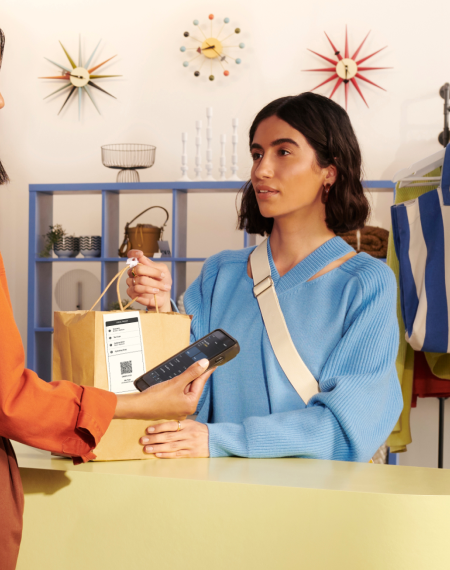
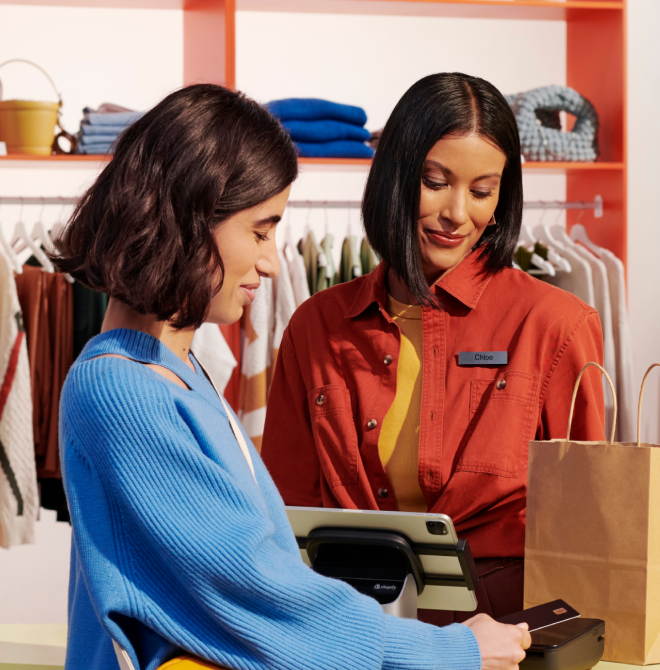
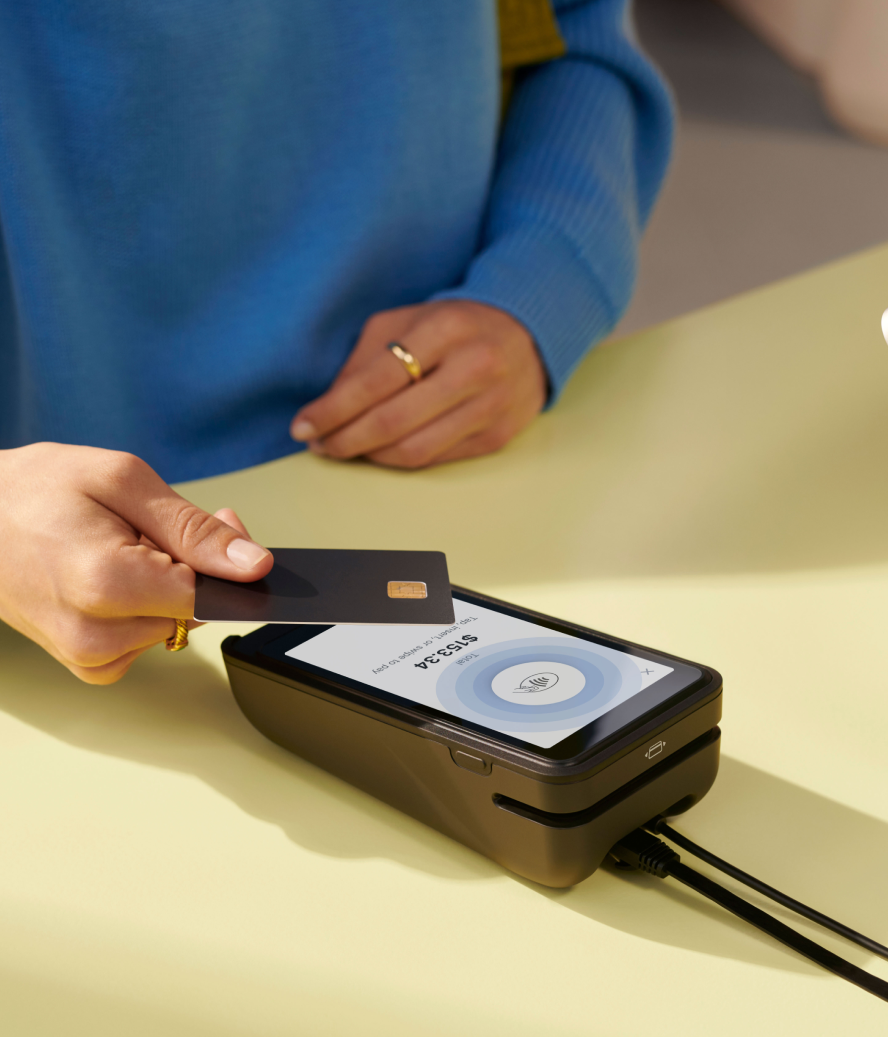

Buy online, pickup in-store (BOPIS) is an order fulfillment method that allows customers to buy products online and pick them up at a brick-and-mortar retail store.
It’s an increasingly popular method: In 2024, more than 68% of shoppers in the US used BOPIS services at least once, up from 57% in 2022.
However, figuring out how to implement this order fulfillment strategy in your retail store can feel like a huge undertaking. Limited technical infrastructure is a major hurdle—the last thing you want is a line of unhappy click-and-collect customers waiting for their BOPIS orders because you don’t have the staff or processes to manage them effectively.
This guide will help you avoid that problem, with guidance on how to implement buy online, pickup in-store for your omnichannel retail business, including the tools, staffing, and processes needed to make BOPIS work.
What is BOPIS in retail?
Buy online, pickup in-store (BOPIS) is a fulfillment option that allows customers to shop from the comfort of their home. Instead of waiting for their order to arrive in the mail, customers can go to their nearest store or pickup location to collect the order. Shoppers are adopting this fulfillment option more and more, and the US leads with more than 70% of retail stores offering BOPIS, also known as click and collect.
How BOPIS works
Here’s how the BOPIS shopping and order fulfillment process works:
1. A customer places an online order
During the online checkout process, shoppers skip traditional home delivery and select BOPIS. They enter their address to find the nearest store to pick up their online purchases. Retailers can also use geolocation to display nearby store information automatically.
BOPIS is a good thing for retailers—having customers come in to pick up their orders leads to more sales. Market Growth Reports found that during pickup, 67% of customers make additional purchases.
2. The retail store fulfills the order
When a customer has placed an online order, there are two retail fulfillment scenarios:
- Default pickup in-store. When all items in an online order are available at your retail store, you can locate them, pick them up, pack them, and set them aside for the customer to pick up.
- Ship to store. If items in an online order are not in stock at your retail store, you can still offer an in-store pickup option by enabling Store transfers. This allows customers to purchase items online and have them shipped or transferred to your store for pickup.
Once the order is ready to collect, send a notification via email or text to inform your customer that their order is available for pickup.
3. Customer picks up their order in-store
Depending on your BOPIS strategy, you may do pickups in-store or at a designated pickup location. Retailers like Mastermind Toys are making BOPIS even more convenient by offering curbside pickup in as little as an hour. The customer can drive to your storefront and be handed their order while staying in their car.
Regardless of your pickup strategy, shoppers should never feel confused when they opt to buy online, pickup in-store. Offer specific instructions about where and how to pick up products in order confirmation emails.
Tip: Customize the Shopify Point of Sale (POS) Smart Grid to quickly view scheduled pickups. Tap “Add tile,” then head to “Fulfillment” and choose “Pickup in-store.” This will show all orders that are prepared or marked as in-store pickup.

Benefits of BOPIS in retail
- Increased store traffic
- Reduced shipping costs
- Immediate fulfillment
- Guarantee the item is in stock
- Quick returns and exchanges
BOPIS lets you optimize the omnichannel retail experience and merge online shopping and physical store experiences, all while making the buying process more convenient. Benefits include:
Increased store traffic
The BOPIS shopping experience provides your customers with the flexibility to choose how they want to fulfill their order. Some 44% of shoppers say convenience is a top priority—click and collect caters to this by allowing shoppers to make a purchase and pick it up immediately.
Plus, when customers stop by your store to pick up their orders, they might look around and browse for more products.
Reduced shipping costs
Instead of shipping orders individually from your distribution center, BOPIS lets you send bulk shipments to your retail store or pickup point. When shoppers pick up orders from your store, you save on last-mile delivery costs and no longer have to absorb the cost of free shipping incentives.
If you don’t offer free shipping, BOPIS also lets consumers save money and time by picking up their purchase in-store or at a pickup point. They can save the $5 they might have spent on shipping while still enjoying the convenience of ordering online.

Immediate fulfillment
Merging online and physical store inventory tracking lets you fulfill orders from your store or distribution center—whatever the faster option is. This gives you more access and control over a larger inventory. It also gives you better insights into what products are available in real time, while fast inventory turnover frees up storage space to stock more bestsellers.
“Being able to put inventory into our stores knowing that it’s not going to limit our ability to sell to a digital consumer has been really, really helpful, especially over this last holiday season,” says Calvin Shayerm, VP of retail at Parachute.
BOPIS is also faster for shoppers who need an item urgently—people want instant gratification, and providing the option to buy online and pick up in store is a way to offer it.
Guarantee the item is in-stock
With click and collect, you pick and pack the customer’s order before you notify them that it’s ready for pickup. This makes it 100% guaranteed that the product will be available when the shopper arrives.
Quick returns and exchanges
With the BOPIS strategy, returns or exchanges are processed immediately if the product doesn’t meet a customer’s expectations. There’s no need to return the order and have either you or the customer absorb this return shipping cost.
BOPIS examples
Here are some examples of retailers who’ve seen incredible results from buy online, pickup in-store services:
Parachute
Ariel Kaye, founder of home furnishings brand Parachute, knew it was important to allow customers to shop wherever and however they wanted. But the brand’s previous infrastructure made the operational aspect of managing omnichannel orders unnecessarily complex.
Parachute migrated to Shopify POS to address this challenge. Now, shoppers can view the brand’s full inventory online and check availability at the customer’s local store. When they’re ready to buy, they can complete their purchase online and head to their store to collect their order.
“With Shopify POS, we now have a single point of truth for our inventory, which makes everything flow much more smoothly,” Ariel says.
Since implementing this order fulfillment model with Shopify, Parachute processes around 3,500 BOPIS orders every year.
Bentley
Canadian luggage retailer Bentley struggled with a commerce stack that included legacy components, and critical omnichannel features such as BOPIS that were partially implemented but not functioning effectively.
Bentley integrated Shopify POS across their retail network to address this challenge. The move gave the brand real-time inventory visibility across more than 125 locations while also enabling key omnichannel features including BOPIS and ship-from-store.
“The redesigned product pages and real-time inventory visibility have made a big difference for our customers—they can easily see what’s available in-store,” says IT technician Guillaume Langelier.
Since implementing its unified commerce strategy with Shopify, Bentley has achieved 129% year-over-year growth in total revenue, 74% growth in online sales, and 17% growth in POS transactions.
BOPIS challenges and how to overcome them
BOPIS can increase sales and customer happiness, but it still has its challenges:
Real-time inventory synchronization
If your inventory isn’t synced properly between your online store and brick-and-mortar shop, the BOPIS model could be a nightmare. You want to avoid having to call or send emails telling click-and-collect customers that the item they just ordered is out of stock. Not only can it take your time away from helping in-store shoppers, but it’s also not a great experience for your customers.
Offbeat Bikes turned to Shopify’s unified data model to fix this challenge. “If a bike or a certain part had just sold out at the shop, our online shoppers weren’t necessarily aware of that,” says owner Mandalyn Renicker. “That led to us overselling items and having to manually cancel orders and issue refunds.”
Tip: Shopify is the only platform to build POS and ecommerce natively on the same platform. Inventory data from wherever you sell updates in one centralized system—and it all happens in real-time—no more stockouts, more happy customers.
Fulfillment speed and in-store space
Many of your customers may suddenly take advantage of your new BOPIS model. It’s not a bad problem to have, but orders pile up, and you could run out of space in-store if numerous shoppers pick up at the same time.
To prevent this:
- Assign BOPIS orders to specific employees
- Set clear pickup windows
- Stagger notification timing to spread customer arrivals
- Create a designated area in your store where people can line up to collect their purchases
- Train pickup staff to batch-process orders so they can move customers through the line more efficiently
Investment to set up and manage BOPIS orders
Someone needs to be available to pick and pack the buy online, pickup in-store orders.
Depending on the size of your business, you may want to hire additional staff who can focus on reviewing and fulfilling click-and-collect orders. Smaller operations can assign pickup duties during scheduled shifts so team members have dedicated time to prepare and hand off orders.
Your technology infrastructure also impacts how long it takes to train staff to operate the system and fulfill BOPIS orders. Because Shopify’s centralized commerce operating system can handle inventory transfers, schedule BOPIS orders, and view pickup orders, you’ll only need to teach retail staff how to operate one system: the POS system they’re already familiar with.
“Shopify is super simple to pick up and easy to learn,” says Parachute’s Ariel Kaye. “And it is nice for a regular part-time associate to be pretty self-sufficient in setting up their POS account.”

Lack of customer awareness
Spending money on a new sales strategy won’t yield a positive return on investment (ROI) if shoppers don’t know about it. You’ll want to boost customer awareness by creating a BOPIS campaign and sharing it across your marketing channels, including email and social media. You can also promote it with homepage messaging, checkout reminders, and signage in your retail store so customers know they can pick up online orders in the future.
BOPIS best practices
Successful BOPIS programs prioritize operational precision. To do this:
- Communicate clearly at every step. Show pickup options during checkout, confirm “ready for pickup” times, and clearly list store hours and required ID/documentation. With 64% of desktop checkout experiences rated as mediocre, clear post-purchase instructions reduce friction and customer anxiety.
- Designate a specific pickup area. Create a branded pickup zone near the entrance to stage orders and manage customer flow. A dedicated space prevents congestion and speeds up the handoff.
- Standardize staff workflows. Train associates on a specific sequence, like: picking items, managing substitutions, verifying identity, and completing the handoff. Standardized workflows ensure fast fulfillment without disrupting the experience for walk-in shoppers.
- Prioritize inventory accuracy. Use real-time synchronization between store and online stock. Implement frequent cycle counts and consider radio-frequency identification (RFID) technology. A leading independent research firm found that Shopify’s unified commerce ecosystem delivers approximately 1% improvement in annual gross merchandise value (GMV) through integrated inventory management.
- Simplify in-store wayfinding. Use prominent signage from the parking lot to the service desk to answer three questions: Where do I go? Where do I wait? What do I need? The pickup experience becomes frustrating if the customer has to hunt for the counter.
Get started with BOPIS and click and collect
An omnichannel retail strategy gives your customers a more convenient shopping experience and a proven track record of increasing sales. Buy online, pickup in-store does exactly that.
With Shopify POS, inventory, orders, and customer data live in one centralized commerce operating system. Shoppers have ultimate flexibility in how they shop and receive their orders, while your team has the infrastructure to serve those customers efficiently.
Read more
- How To Integrate Your Point of Sale With Shopify
- Showrooming and Webrooming: How They Can Help Your Business Grow
- 53 Data-Backed Retail Statistics Shaping Retail and Beyond
- Pros and Cons of a Buy Online, Return In-Store (BORIS) Policy
- 5 Strategies to Future Proof Your Brick-and-Mortar Store
- 5 High-Impact Examples to Help Retailers Build Trust With Online Customers
- How Retail Store Owners Can Optimize Their Mobile Presence
- Lightspeed vs Shopify POS: The Best of All Lightspeed Alternatives
- Why Retail Store Owners Need to Be Thinking About Unboxing (+ 5 Tips to Do It Well)
- Bricks to Clicks: How to Move Your Brick-and-Mortar Business Online
BOPIS FAQ
What does BOPIS mean in retail?
BOPIS stands for buy online, pickup in-store. It’s a retail strategy that allows customers to shop from the comfort of their home and go to the store or pickup location once the order is ready.
What is the BOPIS model?
Buy online, pickup in-store (BOPIS) is a business model that allows customers to place orders through your ecommerce website and schedule pickup from their nearby store, rather than waiting for it to be shipped.
What is the difference between BOPIS and ship-to-store?
BOPIS and ship-to-store are fulfillment strategies that let customers pay for orders online and collect them in-store. With ship-to-store, however, the item isn’t necessarily in-stock and ready for immediate collection. It’s usually transferred from the retailer’s warehouse to the store for pickup.
What is the difference between BOPIS and curbside pickup?
Curbside is a type of buy online, pickup in-store (BOPIS). The main difference is that customers don’t have to physically enter the store to pick up their order with curbside pickup. A retail associate will bring it out to them.

